How to analyze your games in Chess

38 free video tutorials, each tagged by level

What coaches agree on

  • Write down your reasoning, calculations, and the lesson from each game in a notebook or as annotations, instead of relying on memory of the final verdict alone.
  • Pick out just one to three critical moments in the game and dig into them deeply, rather than trying to review every move.
Show more
  • Review a batch of many games together, not just one, so the mistakes that keep repeating stand out as the real weaknesses to train.

Common mistakes

  • Turning on the engine right away and accepting its top move as the lesson, so hindsight bias makes the answer feel obvious even when you would never have found it yourself and nothing is actually learned.
  • Treating every small evaluation swing, or any move other than the engine top choice, as a genuine error, when many such differences are tiny or impractical for a human to find over the board.
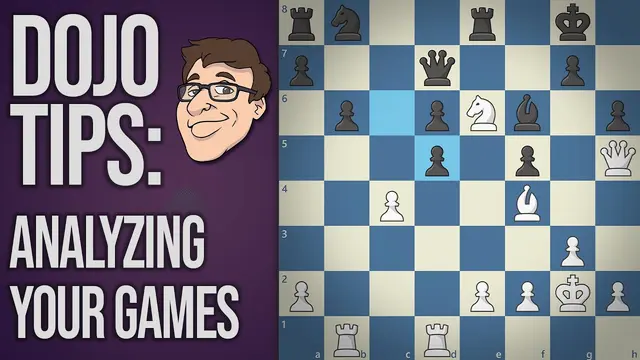
A Quick Guide For Analyzing Your Games | Dojo Tips
Intermediate
A Quick Guide For Analyzing Your Games | Dojo Tips

Reviewer Gives you an actual system, not just vibes.

Moderator Exactly the skill: play games, go through them one by one, classify mistakes (calculation vs. positional vs. king safety vs. greed), look for patterns across many games. The canonical answer to this sub-skill.

4.0
How to ACTUALLY analyze your Chess games
Intermediate
How to ACTUALLY analyze your Chess games

Reviewer Real methodology, not just 'run the engine'. This is how you actually get better from your games.

Moderator The entire clip is about how to review your own games: critiques the lazy 'green button' approach and replaces it with a real method. Nothing off-topic.

3.9
How to Analyze Your Chess Games
Beginner
How to Analyze Your Chess Games

Reviewer Thoughtful, well-scoped, and honest about what's realistic at this level - excellent teaching.

Moderator Explicitly, entirely a methodology video for self-analysis, targeted and scoped (1000-1500 USCF), covering what to focus on, how many positions to pick, when to bring in the engine. Nothing else in this video.

3.8
The Best Way to Analyze Your Chess Games | Challenge Month 9
Intermediate
The Best Way to Analyze Your Chess Games | Challenge Month 9

Reviewer Explains the why behind every rule, not just the rule - this is a real, usable process.

Moderator Entirely and explicitly a methodology for self-analysis - which games to pick, why not to touch the engine first, what to write down. Nothing else going on in this video.

3.8
The Hidden Problem With Analyzing Your Games With an Engine
Intermediate
The Hidden Problem With Analyzing Your Games With an Engine

Reviewer The most genuinely insightful video here -- explains why the engine tricks you into thinking mistakes were obvious.

Moderator Directly and specifically about a real pitfall in engine-based self-analysis -- hindsight bias contaminating what you think you 'saw' during the game. Entirely on-topic.

3.8
How to Use Chess Engines to Analyze Your Games (The Right Way)
Intermediate
How to Use Chess Engines to Analyze Your Games (The Right Way)

Reviewer Best lesson here on NOT over-trusting tiny engine numbers -- a real fix for a mistake almost everyone makes.

Moderator Entirely about how to interpret engine feedback when analyzing your own games, built around a real student's two games. Directly on-topic.

3.7
How To Analyze Your Chess Games (the simple way)
Intermediate
How To Analyze Your Chess Games (the simple way)

Reviewer Backs up its critique with an actual experiment showing the popular method gives inconsistent verdicts — rare, credible rigor.

Moderator Entirely about how to analyze your games well — critiques the most common method (chess.com game review) directly, reframes the goal as future-focused rather than past-focused, and sets up a named method (3x3). Nothing off-topic.

3.7
I Analyzed My Games From 20 Years Ago...
Intermediate
I Analyzed My Games From 20 Years Ago...

Reviewer Honest, specific reasoning about what he'd change.

Moderator A titled player (2200-rated) walks through his own old games move by move, comparing then-thinking to now-thinking. Self-analysis modeled explicitly and honestly.

3.6
How to Analyze Chess Games Efficiently!
Intermediate
How to Analyze Chess Games Efficiently!

Reviewer Teaches you to extract the idea behind engine lines instead of memorizing moves -- genuinely useful.

Moderator Fully dedicated to teaching how to extract ideas from engine analysis rather than memorizing moves, plus a caution about not trusting the computer's move ranking blindly and a note on move-timing. Entirely on the sub-skill.

3.6
How to analyze your games and learn from your mistakes
Intermediate
How to analyze your games and learn from your mistakes

Reviewer The solving-vs-analyzing distinction alone is worth internalizing — well-sourced, thoughtful advice.

Moderator Entirely about how to analyze your own games — cites credible sources (Kuljasevic's book, Kasparov/Botvinnik quotes) and lays out a concrete 5-step process. Nothing off-topic.

3.6
How To Analyze Your Chess Games
Intermediate
How To Analyze Your Chess Games

Reviewer Goes beyond 'trust the engine' — shows concretely where blind engine-following leads you astray.

Moderator Explicitly and entirely about reviewing your own played games — phase by phase (opening, middlegame, time usage), with real games from real students. Completely on-topic.

3.5
How to Analyze Chess Games
Intermediate
How to Analyze Chess Games

Reviewer Sound framework and good advice on skipping the engine at first -- wish the excerpt got further into the example.

Moderator Entirely dedicated to a structured method for analyzing your own games (without the engine first), broken into opening/middlegame/endgame phases, with an explicit framework tied to player level. On-topic throughout what's shown.

3.3
How To Properly Analyze Your Chess Games
Intermediate
How To Properly Analyze Your Chess Games

Reviewer Practical on the tool side, a bit meandering once it gets into the actual game.

Moderator Squarely about reviewing your own games: covers which tools to use, how to get an OTB or Lichess game into a review engine, then walks an actual example review. On-topic throughout.

3.2
Tips for Analyzing your Chess Games
Intermediate
Tips for Analyzing your Chess Games

Reviewer Useful tips, but you have to dig through the meandering.

Moderator Covers organizing your games into a study, annotating your own thinking before running the engine, and building a reference library from strong players' games. All core to self-analysis practice.

3.1
How to Analyze (& ANNOTATE) Your Own Games
Intermediate
How to Analyze (& ANNOTATE) Your Own Games

Reviewer Good mindset shift -- stop over-annotating, dig into one moment -- but light on concrete technique.

Moderator Directly about the philosophy and method of analyzing/annotating your own games -- contrasts how master games get annotated for an audience vs. how you should annotate for yourself, advocates picking one moment to dig into rather than the whole game. On-topic throughout, just more meta/methodological than move-by-move.

3.1
The #1 Reason You're Losing Your Chess Games
Beginner
The #1 Reason You're Losing Your Chess Games

Reviewer Clear, well-built lesson with real examples - does what it promises.

Moderator Prophylaxis - constantly asking what your opponent wants - is a core habit for evaluating any position, whether live or in review, and the video explicitly scales the idea from spotting one-move threats up to deep planning. It's about in-game thinking more than literal post-game review, but it's the same muscle.

3.0
Why it makes Sense to analyze your own Rapid Games | Lichess Livestream | IM Alex Astaneh
Advanced
Why it makes Sense to analyze your own Rapid Games | Lichess Livestream | IM Alex Astaneh

Reviewer Great habit modeled at the start — self-test before the engine, then verify — though most of what follows is just raw calculation.

Moderator This is a live demonstration of the exact skill in action — the IM tests himself on a critical position from his own rapid game before checking the engine, explicitly framing it as a way to 'sharpen pattern recognition' the same way you'd exercise. That's a direct, authentic model of the self-analysis process, not just talk about it.

3.0
you don't know how to analyze your games? come to ... - Instagram
Beginner
you don't know how to analyze your games? come to ... - Instagram

Reviewer Solid explanation of the process, with a bit of a sales pitch at the end.

Moderator Explains the actual process, run an engine review, go move by move, find your mistakes, then bring the ones you do not understand to a coach. Squarely about how to analyze your games.

2.8
Play chess with all your pieces! Play active moves! Two of my games as example!
Intermediate
Play chess with all your pieces! Play active moves! Two of my games as example!

Reviewer Good lesson buried in a rough delivery - worth the effort though.

Moderator He's walking through two of his own games specifically to show why active pieces won and passive ones lost - that's literally 'how to analyze your games' in practice, using real examples instead of abstract advice.

2.7
FunMasterMike Reviews YOUR CHESS GAMES!
Intermediate
FunMasterMike Reviews YOUR CHESS GAMES!

Reviewer More real teaching under the gimmick than you'd expect.

Moderator He's analyzing kids' games rather than 'your own', but the process shown (reading the eval bar, questioning the engine's top choice, explaining why a natural-looking move is actually risky) is exactly the meta-skill of game analysis in action.

2.5
Inside my head Instructive slow games explained.
Advanced
Inside my head Instructive slow games explained.

Reviewer Authentic thinking-out-loud, but too dense and opening-specific for most learners to take much away.

Moderator This is a real-time narration of his own thought process during an actual game - candidate moves, doubts, recalculating - which is exactly the kind of introspective self-analysis the skill is about, just shown live rather than taught as a method. Not an explicit how-to, but a genuine demonstration of the thing itself.

2.5
How To Analyze Your Games With Stockfish On Chess.com Or Lichess
Beginner
How To Analyze Your Games With Stockfish On Chess.com Or Lichess

Reviewer Solid tool tutorial, but it stops at pressing the right buttons — doesn't get into what to actually do with the output.

Moderator For most learners, 'analyzing your games' concretely means loading a game into an engine and reading the output — and that's exactly what this teaches, on both major platforms, start to finish. It's a narrower, more mechanical slice of the skill than a methodology video, but it's squarely what the skill title literally asks for.

2.4
This is how you can analyze your chess games for free! ...
Beginner
This is how you can analyze your chess games for free! ...

Moderator Directly walks through using a free tool to run an engine review of your chess.com games. Squarely about analyzing your games.

Reviewer Handy tool tip, but it stops at click analyze rather than teaching you how to actually learn from it.

2.3
Chess Strategy, Two Games, Legends, Bad Piece, Chess Lesson
Intermediate
Chess Strategy, Two Games, Legends, Bad Piece, Chess Lesson

Reviewer Solid concept, clearly hammered home twice - sticks with you.

Moderator Uses two classic annotated games to teach the 'bad piece' concept - a real, transferable idea for evaluating a position, which is core to knowing how to look at any game, your own included. It's historical games rather than the viewer's own, but it's teaching the analytical lens, which is the point.

2.2
Missing Tactics in Your Games? Watch this!
Intermediate
Missing Tactics in Your Games? Watch this!

Reviewer Great, concrete tactical-awareness checklist - just aimed a bit sideways from the assigned topic.

Moderator This is really a tactics/pattern-recognition lesson (why you miss things in games that you'd solve as puzzles) rather than a lesson on the process of reviewing your games - it's adjacent and useful for self-diagnosis, but the core teaching is about checks-captures-threats and attacker counting, not the meta-skill of analysis itself.

2.1
Overall Field: How to Analyze Your Own Games to Improve? | #USChessChamps
Beginner
Overall Field: How to Analyze Your Own Games to Improve? | #USChessChamps

Reviewer Nice validation that even titled players keep it simple, but nothing here is developed enough to apply.

Moderator Every soundbite directly answers 'how do you analyze your own games' -- engine use, looking for patterns of mistakes rather than every move, honesty about losses. Squarely the topic, just delivered as a rapid-fire interview compilation, so no single idea gets to develop.

2.1
I Analyzed My Viewers' Games
Beginner
I Analyzed My Viewers' Games

Reviewer Good individual callouts, but it won't teach you how to do this yourself next time.

Moderator This is live move-by-move feedback on a Discord member's London System game - it demonstrates analysis happening rather than teaching you how to structure your own review process. You learn some real principles by osmosis (trade with a reason, develop your rooks too) but there's no explicit 'here's how YOU should analyze your games' takeaway.

2.0
think most chess players are analyzing their games wrong. ...
Intermediate
think most chess players are analyzing their games wrong. ...

Moderator Argues that most players analyse games one at a time (find the blunders, move on) and miss their recurring mistakes: missed threats, rushing when ahead, repeating the same tactical errors. The better question is 'what do I keep doing wrong?' On the right topic, but mostly the pitch for an analysis app.

Reviewer The core idea is a good one: track the mistakes you keep repeating across games instead of fixing each blunder in isolation. But it's mostly a pitch for an app, with no method for doing it yourself.

1.8
Master Chess Strategy: Analyze Positions & Win More Games
Intermediate
Master Chess Strategy: Analyze Positions & Win More Games

Reviewer Solid, well-explained positional ideas — useful for analysis generally, just not framed around reviewing your own games.

Moderator This teaches positional analysis of a single grandmaster game (pawn structure, open files, outside passers, bishop endgame technique) rather than the specific practice of reviewing your OWN played games and learning from your own mistakes — it's closer to 'how a strong player thinks about a position' than 'how to analyze your games,' though the thinking process demonstrated is the same one you'd apply to your own games.

1.5
OMG! Mikhail Tal Resigns... | Best Chess Games, Moves, Sacrifices, Traps, Strategies & Ideas
Advanced
OMG! Mikhail Tal Resigns... | Best Chess Games, Moves, Sacrifices, Traps, Strategies & Ideas

Reviewer A little more substance than the average 'watch this sac' video, still spectacle-first.

Moderator Similar format to the other Tal videos - move-by-move recap of a historic attacking game with some genuine strategic commentary (weak squares, restricting castling) mixed into the 'watch this insane move' energy. It's entertainment-first with analysis as a side dish.

1.4
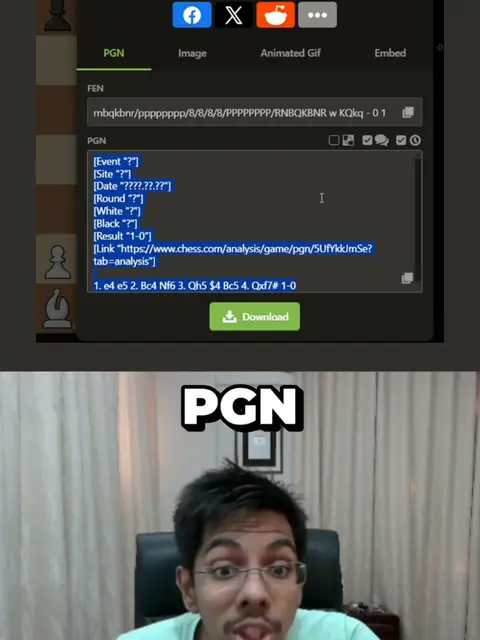
Free Chess Game Analysis and Strategies Explained
Beginner
Free Chess Game Analysis and Strategies Explained

Moderator Shows the mechanical first step of reviewing a game: copy the PGN, paste it into a free analysis site, let the engine run. That is a way into game analysis, not a method for it. Nothing on what to look for or how to learn from your mistakes.

Reviewer Handy if you do not know where to paste a PGN, but the real work, figuring out why you went wrong, is not covered.

1.3
Mikhail Tal's Best Chess Games | Greatest Moves, Sacrifices, Tactics, Traps, Strategies & Ideas
Advanced
Mikhail Tal's Best Chess Games | Greatest Moves, Sacrifices, Tactics, Traps, Strategies & Ideas

Reviewer Some genuine insight, but mostly hype around a famous sacrifice.

Moderator This recaps a Tal brilliancy move by move with some real reasoning sprinkled in (why he shifted plans from queenside to kingside), but it's much more a highlight reel of a famous sacrifice than a demonstration of how to analyze a game - the emphasis is on 'look how amazing this is,' not on teaching a repeatable process.

1.3