
Advanced
When to exchange Pieces? | Strategic Exchanges | Intermediate Level | GM Markus Ragger
Coach's take: Two real tools for evaluating a trade, not just one rule of thumb - and a GM walks you through exactly when to use which. Excellent.
Chess
Trade when it helps you and refuse when it does not.
Coach's take: Two real tools for evaluating a trade, not just one rule of thumb - and a GM walks you through exactly when to use which. Excellent.

Coach's take: Every principle comes with a real position proving the point - this is a proper checklist lesson.

Coach's take: The pawn-ratio explanation alone makes the 'why' behind trading finally click.

Coach's take: Four clear trade examples back to back, each teaching something different. Solid.
![06. When to Trade Pieces [Reading the Board] Chess Lessons - Chess.com](https://i.ytimg.com/vi/gzKdLU8kpmo/hqdefault.jpg)
Coach's take: Four different flavors of the same decision, each one taught clean - rooks, bishops, an opening pawn trade. Worth the four minutes.

Coach's take: Clear rule, clear proof -- you'll walk away with an actual reusable principle.

Coach's take: Makes you guess the eval first, then explains why you were wrong -- excellent teaching method.

Coach's take: Great honesty in that losing example - showing your own blunder teaches more than another highlight reel.

Coach's take: The 'what stays on the board' reframe alone is worth the watch.

Coach's take: Gives you a real framework, not just 'sometimes trades are good' -- recommend this one.

Coach's take: Dense and instructive if you can follow the moves -- worth the effort.

Coach's take: Simple rules, memorable analogy, does exactly what it promises for a newer player.

Coach's take: Clean, connected reasoning - weak pawn, kingside attack, why the queen trade kills black's chances. This is how you should think about it.
![When To Trade Pieces In Chess? [And When Not To]](https://i.ytimg.com/vi/IyCwrtM3BSk/hqdefault.jpg)
Coach's take: Good rule, applied over and over on real positions - you'll actually remember 'forced or not' after this one.

Coach's take: Clear framework, one real example proving it -- does the job.

Coach's take: This is the one to send your 1000-1500 rated students -- it's their exact leak.

Coach's take: Good reusable principle, a bit rough to follow, but the logic holds up across two examples.

Coach's take: The 'ask each piece where it wants to go' trick is a real, usable technique - just wish it were delivered more tightly.

Coach's take: Good concrete payoff (the fork) for a lesson that's aimed right at a classic beginner habit.

Coach's take: Great tool (count the squares) buried in a fast-moving, notation-heavy GM lecture.
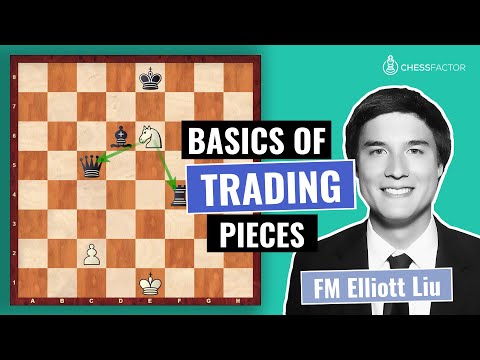
Coach's take: Patient, correct fundamentals - point values and the trade-vs-exchange distinction, explained clean before anything fancier.

Coach's take: Clear practical logic for an unusual trade -- you'll understand the 'why', not just the 'that'.

Coach's take: Good if you already know your openings -- explains the 'why' behind several real trade decisions.

Coach's take: Right principle, repeated with real examples, just a bit rough around the edges in delivery.

Coach's take: Dense but real positional teaching -- you'll need to concentrate through the delivery.

Coach's take: Solid trade instincts from a real IM, just delivered as stream-of-consciousness - stick with it past the opening trivia.
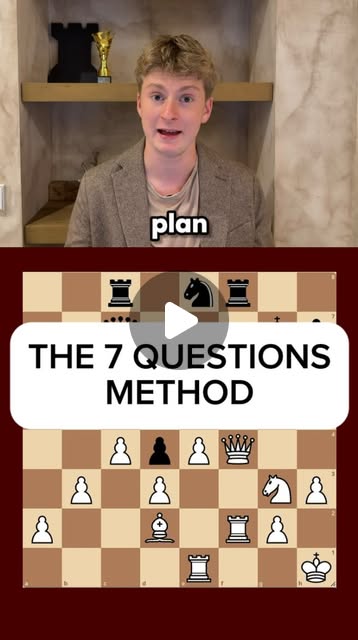
Coach's take: Short segment, but that one question alone teaches more than most full videos on this topic.

Coach's take: Real lesson here, just don't mind the course plug in the middle.

Coach's take: Good lesson, but you're wading through a lot of filler to get it.