
Beginner
Reviewer Outstanding, safety-first, step-by-step teaching -- a model lesson.
Moderator The entire video is roll-over, deliberately broken into digestible pieces with a prop (towel roll) and multiple lead-up drills. Completely on-topic.
4.0
43 free videos on technique and tips, each tagged by level
Reviewer Outstanding, safety-first, step-by-step teaching -- a model lesson.
Moderator The entire video is roll-over, deliberately broken into digestible pieces with a prop (towel roll) and multiple lead-up drills. Completely on-topic.

Reviewer The deepest, most accurate breakdown of what actually makes roll-over work.
Moderator Wall-to-wall roll-over content -- prerequisite check (seal), the core teaching point (upper-arm/triceps push vs. momentum), a clear description of the common mistake (hoisting the legs with momentum), progression through knees-bent to legs-behind-head, and both directions of the exercise. Nothing here is off topic.

Reviewer Clear, safe, well-sequenced -- a genuinely good lesson on roll-over.
Moderator This is entirely built around teaching the roll-over -- it opens by placing roll-over in the mat sequence right after roll-up, explains the biomechanics of bending the spine tail-to-head, gives a specific readiness test (the hip lift), and walks through full execution including the leg-opening/flick and the reverse direction. Every minute of this is roll-over content.

Moderator Careful, full breakdown of the rollover - lengthening the hamstrings, finding the core connection, then the sequential spine movement, with props for anyone who needs support.
Reviewer Flags who shouldn't attempt this (neck issues, osteoporosis) before you even start - that's real coaching, not just a demo.

Moderator A proper breakdown of the rollover built in stages - prep work first, understanding imprinted versus neutral spine, then building toward the 90 degree position.
Reviewer The spine-position explanation before you ever lift your legs is exactly what most rollover videos skip - excellent grounding.

Reviewer About the most complete beginner rollover lesson in this batch.
Moderator Fully dedicated beginner-focused rollover lesson with two easier versions and a bridge substitute for people not ready at all.

Reviewer Very thorough breakdown, great teaching progression.
Moderator Thorough breakdown of the Roll Over, explicitly framed as the progression after Roll-Up and Rolling Like a Ball, with slow-motion breakdown then real-time run-through.

Reviewer Excellent progressive teaching, real coach cueing throughout.
Moderator Entirely dedicated to teaching roll-over, walks through every progression variant of the exercise.

Reviewer The cue about reaching your butt bones toward your heels instead of just swinging your legs over is the kind of detail that actually changes how this feels.
Moderator A detailed technical breakdown of the rollover - what people usually get wrong (hips collapsing, neck jamming) and the cues to fix it, plus modifications to build toward the full version.

Reviewer The neck-safety comparison alone makes this worth watching.
Moderator Entirely dedicated to Roll Over, multiple variations from bent-knee through straight-leg-with-flexed-feet, explicit safety comparison of too-far-back vs correct.

Reviewer Detailed cues plus a real fix for a common mistake.
Moderator Full, detailed walkthrough of the Roll Over with breath cues, imagery (string of pearls, energy through the heels), and a specific fix for the common mistake of popping the head up.

Reviewer Actually solves the 'I can't lift my hips' problem instead of just showing the move.
Moderator Entirely dedicated to the Pilates Roll Over, including a full beginner-focused variations section for people who can't yet lift their hips over.

Reviewer Clear cueing plus the right safety context.
Moderator Squarely the Roll Over, explicitly placed as the first exercise of the advanced mat sequence with prerequisites stated.

Moderator Runs through the rollover using different equipment - ball, ring, resistance bar, foam roller - each one changing what you're working on.
Reviewer Explaining what each prop actually changes (inner thigh engagement with the ring, extra instability on the foam roller) makes this more than just a gear showcase.

Moderator A staged build-up of the rollover for people who haven't done it before, starting with a simple roll down and up before adding the full inversion.
Reviewer Explicitly tells you it's fine if it looks messy at first - that reassurance is worth a lot when you're learning something that looks intimidating.

Reviewer Good technical detail plus honest safety caveats.
Moderator Entirely the legs-spread rollover variation with several sub-variations shown (reverse curl prep, diagonal tabletop entry).

Reviewer Safety-conscious teaching with a useful equipment variation.
Moderator Directly the Roll Over, with a with/without-handles variation shown.

Reviewer Great fault-fixing breakdown for people who already attempt roll-over.
Moderator Whole video is a breakdown of common roll-over mistakes — bending in the wrong spot, neck compression.

Reviewer Solid teach with real modifications for people who aren't ready yet.
Moderator Full roll-over teach with modifications for people who can't yet do the full version, addresses handles vs no handles.

Reviewer Building the toe-tap in as a second layer rather than throwing it at you immediately is a smart way to teach this.
Moderator A full rollover breakdown that's upfront about who it's for - people with real Pilates mileage, good core strength and spinal mobility - built up in layers with a toe-tap option.

Reviewer Explains the why behind every prep drill — really solid teaching.
Moderator Entirely building blocks toward the rollover — isometric shoulder/arm strength prep, dead bug leg control, hamstring stretch — an explicit 'beginners' on-ramp even though the full movement itself isn't shown in this excerpt.

Reviewer Detailed but a bit meandering — worth it if you sit through it.
Moderator Full setup and execution walkthrough of roll-over, with prerequisite gating (roll-up quality) explained.

Reviewer Good structured framing, not just a random clip.
Moderator Named directly, 'fundamental exercise... controlled spinal articulation' -- squarely the skill.

Reviewer Great 'should I even do this yet' explainer before you attempt roll-over.
Moderator About roll-over specifically — what it is, who it's for, and the prerequisite exercises needed before attempting it.

Moderator A concise, level-by-level technique tip - tabletop legs, then straight legs, then the full overhead position with the leg circles at the end.
Reviewer The reminder not to swing your legs over but to curl with control is the one cue worth pausing on here.

Reviewer Good structure to follow and she explains why it works — a notch above a quick demo clip.
Moderator Correctly on-topic — full roll-over movement with two leg variations (together and apart), matches the sub-skill precisely.

Reviewer One sharp, useful cue for cleaning up your roll-over.
Moderator Focused entirely on one specific technical nuance of roll-over: reaching vs. hinging/falling the legs over.

Reviewer Nice cueing during a real set, but more demo than deep-dive.
Moderator This is a straight demonstration/cueing of roll-over as the third exercise in the classical mat sequence -- breath cues, the horizontal 'piercing the wall' shape, hip placement, reverse direction. Entirely on the exercise.
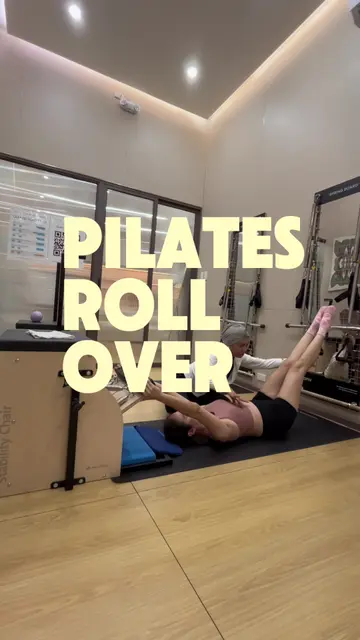
Reviewer Good cues for the lift and the controlled roll down: hips from the abs, ankles flexed, legs a fist apart. It's class cueing, so nothing on prerequisites or what to do if you can't get the legs over.
Moderator Class-style cueing through the roll-over: lift the hips on the exhale with an abdominal scoop, tailbone to the ceiling, ankles flexed, legs straight and a fist apart, then roll the upper back down under control with the hands pressing. Squarely the exercise.

Reviewer Good precise cueing, not vague.
Moderator Gives real roll-over initiation cues (inhale prepare, exhale peel spine off mat) even though it continues into Teaser with a prop -- the roll-over portion itself is clearly taught.

Reviewer Focuses on the right thing — control on the way down, not just getting up.
Moderator Second in a prep series explicitly building toward the rollover — pelvic tilts and a bridge-with-leg-reach progression, with a direct 'do this for a week and you'll be ready' framing.

Reviewer Clean, correct cueing for a small first step toward the skill.
Moderator This is explicitly 'roll over prep' — tabletop position, pelvic floor engagement, small tailbone roll. A lead-up drill rather than the full movement, but that's squarely part of teaching this skill.

Reviewer Correct but bare-bones - a cue reel, not a real lesson.
Moderator This is exactly the Roll Over - legs up and overhead, open/flex, roll down vertebra by vertebra, reversing direction.

Reviewer Handy assist tool for roll-over if you have a spine corrector, gated on existing shoulder-stand ability.
Moderator Teaches the roll-over movement pattern but on the spine corrector apparatus rather than the mat — still the same skill, transferred.

Reviewer More of a benefits pitch than a how-to.
Moderator Demonstrates the actual Roll Over and states plainly it's advanced and requires prior core training, though it's short.

Reviewer Well-intentioned but loosely explained -- you'll get the gist, not the precision.
Moderator Focused on prepping people for roll-over via tabletop pelvis-lift drills, and directly explains why (control bringing the legs over the head). It's rambly and a bit unpolished but stays on-topic throughout.

Reviewer Fun to watch but light on actual coaching detail.
Moderator Combines Roll-Up into Roll Over as one flowing combo - still squarely covers the Roll Over portion, just folded into a bigger sequence.

Reviewer Cues check out, but this assumes you already know the move — not enough here to learn it from scratch.
Moderator This is genuinely the Roll-Over — legs overhead, rolling vertebra by vertebra, feet turning out to open the sacrum. Correct match, unlike the roll-up mixup elsewhere in this batch.

Moderator A teacher plans a six-week block to build a class up to the roll-over. Names what the exercise demands: spinal mobility, shoulders mobile enough to hold the head-and-shoulders tripod on the mat, hip control from leg circles, and enough core to control the way down. Lays out the gateway work: roll-up, rolling like a ball, open leg rocker, single leg circle, series of five. It is roll-over from the planning side, not a step-by-step of the movement itself.
Reviewer Solid read on what holds people back from rolling over: spinal mobility, tight shoulders and control on the way down. It is a class plan for instructors, so take the prep logic from it rather than expecting a lesson on the move.

Reviewer Solid prep drills that genuinely build the strength roll-over needs -- indirect but useful.
Moderator This doesn't teach roll-over itself at all -- it's three prep exercises (pelvic tilt, bridge, tabletop leg circles) meant to build the strength and mobility roll-over requires. It's directly and explicitly positioned as prep for this sub-skill, so it's relevant, but a learner watching this alone won't learn the roll-over movement itself.

Reviewer Solid cueing for the already-trained, but leans on assumed knowledge -- moderate teaching value.
Moderator Rollover only shows up as the third exercise in a three-exercise advanced sequence after the Hundred and Roll Up. The back half does give real rollover-specific cueing (hand position, dorsiflexion, avoiding the collapse fault) so it's more than a passing mention, but it's sharing the video with two other exercises.

Reviewer Technically correct but reads like a manual, not a lesson.
Moderator Squarely the legs-spread roll-over variant, step-by-step positions given. Relevant even if it's a rough machine-style caption translation.
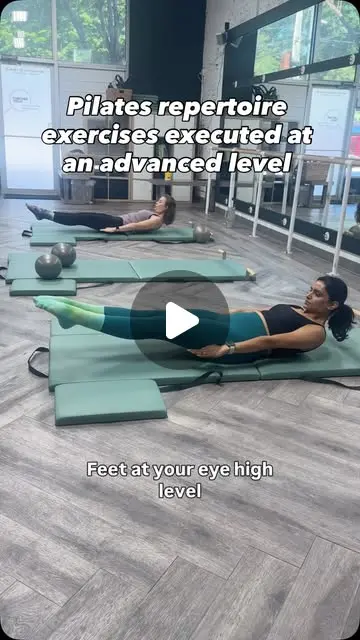
Reviewer Accurate cue sequence for the legs-open version, but it moves fast and skips setup, neck position and what to do when it feels tight. Good as a reminder if you already know the move.
Moderator Class clip with the roll-over cues: legs up and over, toes down on the floor, open to the width of the mat, flex, point, close, then roll down the spine bone by bone. It then goes into another rolling movement. It is the roll-over, but as a fast cue run rather than a breakdown.