Reading routes in Climbing

39 free videos on technique, drills and tips, each tagged by level

What coaches agree on

  • Read each hold's angle: it shows which hand the hold suits and how your body should be positioned to use it.
  • Treat your plan as a first draft: climb it, compare what you did with what you planned, and adjust.
Show more
  • Weigh up the possible sequences and pick the one that fits your own height, strength and flexibility, since the best sequence differs from climber to climber.

Common mistakes

  • Jumping on with no plan and working the moves out as you climb, which wastes energy and can leave you stuck halfway up.
  • Overlooking a hold, often a small or hidden foothold, and only finding it after you have fallen off.
Most Climbers Read Routes Wrong
Intermediate
Most Climbers Read Routes Wrong

Reviewer The best route-reading framework in this batch - checkpoint holds and working backwards actually changes how you approach a climb.

Moderator Entirely dedicated to the mental process of route reading - skimming, identifying cruxes, checkpoint holds, sequencing. As on-topic as it gets.

4.0
Unlock Sequencing: Step by Step for Climbing Beta
Beginner
Unlock Sequencing: Step by Step for Climbing Beta

Reviewer Thorough, honest about what works for different climbers, and genuinely useful.

Moderator A complete, well-organized method for exactly this skill: review every hold including hidden footholds, plan the first move, visualize the rest, compare strategies (bottom-up vs. crux-first vs. backwards), nail down the crux, then test it for real and adjust. Defines 'beta' along the way. Couldn't be more squarely on-topic.

3.8
Climbing Techniques - Route Reading. Get more flashes!
Beginner
Climbing Techniques - Route Reading. Get more flashes!

Reviewer Great structure - three levels that scale with your experience, and the walking-trip analogy actually lands.

Moderator A dedicated, structured deep-dive into route reading with nothing else mixed in - squarely the target skill.

3.8
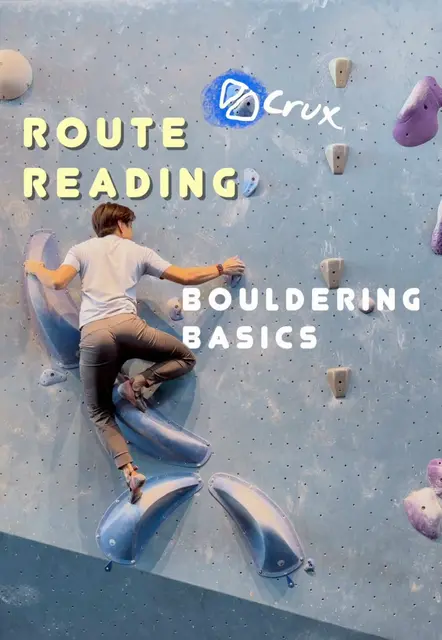
How To Read Bouldering Routes: An In-Depth Breakdown
Beginner
How To Read Bouldering Routes: An In-Depth Breakdown

Reviewer Excellent — the thumb-chalk trick and the 'repeat the process on the same climb' bonus tip are things most videos in this batch miss.

Moderator Clean 5-step process top to bottom: find start/finish, ID handholds, work out which hand per hold (thumb-chalk position is a nice specific detail), ID footholds and footwork options, then test and refine your beta on the wall. Bonus tip to repeat the process on the same climb. Entirely on-topic.

3.8
Beginner Bouldering Route In Depth Break Down With rockentry
Intermediate
Beginner Bouldering Route In Depth Break Down With rockentry

Reviewer Shows you HOW to think through a route, not just what he did -- genuinely useful.

Moderator This is exactly the skill: he states his process up front -- 'I take a look at the route and try to figure out beta by looking at the hand holds, the foot holds, and distance and which position my body is gonna be in' -- then walks the entire climb move by move explaining WHY he chose each option (toe hook over heel hook because of the angled volume, flagging to avoid barn-dooring). Closes with the key route-reading truth: there's no single correct beta for everyone. Couldn't be more on-topic.

3.7
Instantly CLIMB better with Route Reading (Visualisation)
Beginner
Instantly CLIMB better with Route Reading (Visualisation)

Reviewer Better than most because it shows what to do once the easy left-right-left pattern breaks down.

Moderator Full step-by-step route-reading walkthrough: step back and scan the whole line, ID hand vs foot holds via chalk/rubber, work out which hand goes first from the start holds, then extends the method to a trickier V2 by anchoring off one obvious hold and working the sequence backward/forward. All on-topic.

3.7
Common Mistakes When Sequencing (Beta for Climbing)
Intermediate
Common Mistakes When Sequencing (Beta for Climbing)

Reviewer Sharp advice for anyone who already climbs and keeps fighting their own beta.

Moderator This is about sequencing mistakes - forcing the setter's assumed order instead of testing alternatives, sticking rigidly to your preferred style, over-relying on your strengths, and drilling the whole route instead of isolating the hard move. That's squarely reading a route and working your beta.

3.6
Entry Level Comp Style Bouldering Route In-depth Breakdown with rockentry!
Intermediate
Entry Level Comp Style Bouldering Route In-depth Breakdown with rockentry!

Reviewer Shows the real trial-and-error of solving a boulder -- valuable, if a little less structured than his other breakdown.

Moderator Same excellent format as his other breakdown: identifies the unconventional beta a comp-style problem demands (using the wall with a foot for balance, pushing off it to free a hand), documents a real mistake he and a training partner got stuck on, and shows how a second opinion (rockentry) reframed the mantle sequence. This is the actual process of solving a route: try, get stuck, diagnose why, adjust. Squarely on-skill.

3.6
Route Reading in 5 STEPS | Vlog #65
Intermediate
Route Reading in 5 STEPS | Vlog #65

Reviewer Practical framework you can actually reuse on your next problem.

Moderator A genuine structured method for route reading: identify all holds, determine hold direction, work out the hand/foot sequence, decide static vs. dynamic execution, then put it together. Applied live to a real V4 problem. Exactly the sub-skill, systematically taught.

3.6
Make-Up Advanced: The Best Drill for Route Reading & Beta Creativity
Advanced
Make-Up Advanced: The Best Drill for Route Reading & Beta Creativity

Reviewer Teaches you to think like a setter -- genuinely transfers to reading any route.

Moderator A drill built specifically to train route reading and beta creativity -- designing minimal-hold problems that force one intended sequence, then trying to break your own beta. This is squarely, explicitly about the sub-skill.

3.6
Route Reading 101 || How to with Louis Parkinson
Beginner
Route Reading 101 || How to with Louis Parkinson

Reviewer Practical, honest tips — especially the caveat that chalk marks show what people tried, not what's right.

Moderator Explicitly billed and delivered as a basic route-reading tutorial for people who just started climbing. Every minute is on-topic: counting holds, telling hand from foot, visualizing sequence.

3.6
How to route read a climb or boulder
Beginner
How to route read a climb or boulder

Moderator This lays out reading a route step by step - spot every hold you'd use (including nearby volumes and features), work out the hand order, rehearse it on the ground, then do the same for your feet and visualize the harder moves. This is exactly what reading a route is.

Reviewer Clear, simple process you can start using on your very next climb.

3.5
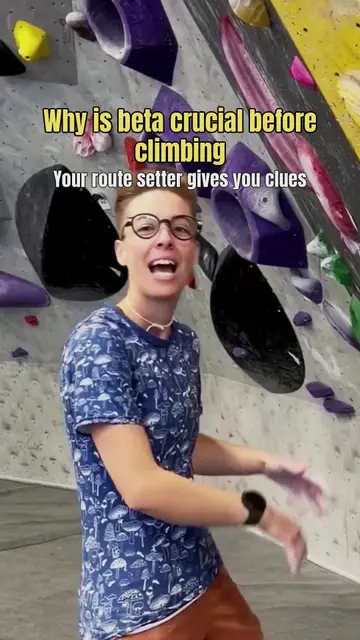
Can't find the right moves? Read the route setter's intent
Beginner
Can't find the right moves? Read the route setter's intent

Moderator Direct lesson in reading a route - using the angle of a hold to work out the body position the setter intended, then using the nearby footholds to figure out how you move from one position to the next. This is exactly what reading a route means.

Reviewer Simple, clearly demonstrated method - a great habit to build before getting on a route.

3.5
Master Route Reading: The 1-Minute Climbing Drill | TikTok
Intermediate
Master Route Reading: The 1-Minute Climbing Drill | TikTok

Reviewer A real drill you can go try on your next session, explained properly.

Moderator This is entirely about training route reading as a skill: review the route, turn away, recite your planned sequence, then execute and compare. That IS the sub-skill, packaged as a drill.

3.5
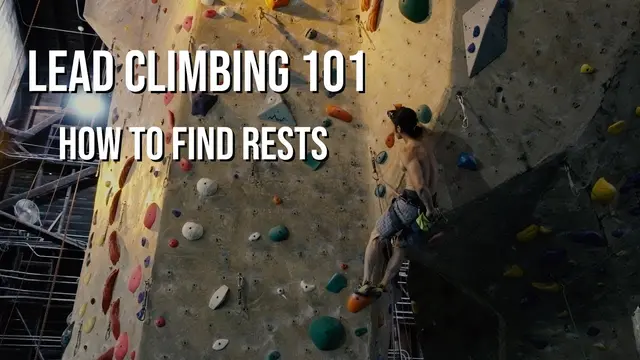
Lead Climbing 101 - How to Find Rests
Intermediate
Lead Climbing 101 - How to Find Rests

Reviewer Concrete, technical, and grounded in one real route start to finish.

Moderator Walks a real 5.12b route pointing out specific rest points as they appear -- style transitions, dihedral stemming, post-crux jugs -- and explains the body positioning that makes each one work. This is exactly what route reading looks like in practice: recognizing terrain and reading the opportunities it offers.

3.4
IMPROVE Route Reading | 5 Tips from a Competitive Rock Climber
Beginner
IMPROVE Route Reading | 5 Tips from a Competitive Rock Climber

Reviewer Solid tips, especially reading hold angle for hand choice — just wish it were tighter.

Moderator Defines route/beta/flash then gives tips squarely on reading a route: look before you climb, check the wall from multiple angles, hold orientation tells you which hand it's set for, chalk/shoe marks. All on-topic.

3.3
Route Reading in Bouldering: How to Plan a Climb First
Intermediate
Route Reading in Bouldering: How to Plan a Climb First

Moderator Shows how to read a boulder problem before you pull on: go hold by hold and ask which way each one wants you to pull, find the crux, and work out where the heel hooks and toe hook will be needed. Squarely on route reading, walked through on a real problem.

Reviewer Solid. Asking 'which way does this hold want me to pull?' is a habit worth copying, and it's shown on a real problem.

3.1
How to Read Climbing Gym Routes Better
Beginner
How to Read Climbing Gym Routes Better

Reviewer Simple, clear, and it actually clicks -- good first explanation of the idea.

Moderator The concept itself, taught through a real, concrete example -- noticing which way a hold is angled to decide which hand to use, so you don't paint yourself into an awkward match later. That's the essence of route reading.

3.1
Lattice | Climbing Training & Coaching | 2 technique drills ...
Intermediate
Lattice | Climbing Training & Coaching | 2 technique drills ...

Moderator Two route-reading drills from a coaching outfit: flashing boulders (look over every hold, predict grips and momentum, use brush marks and chalk as clues) and eliminates (remove a hold or two from a problem you know so you have to find a new sequence). Both sharpen route reading, with momentum and power as side benefits.

Reviewer Practical and well explained, including when to do the drills and how many; good stuff for improving how you read a problem.

3.0
How to route-find when scrambling
Beginner
How to route-find when scrambling

Reviewer Solid, honest advice on reading ground and guidebook together -- a bit soft on system, strong on judgement.

Moderator This is squarely route-finding: reading the guidebook's broad description, choosing your own line up the ridge, and using ground sign -- polish, crampon scratches -- to spot where others went. It's scrambling rather than a rock-climbing pitch, but the underlying skill (turning terrain plus guidebook prose into an actual line on the hill) is exactly what 'reading routes' means. Core of the video, not a tangent.

2.9
"Ever felt lost while staring at a climbing route? You're not ...
Beginner
"Ever felt lost while staring at a climbing route? You're not ...

Reviewer Easy, effective drill for remembering your beta, and the check afterwards is the smart part.

Moderator The '1 minute review' drill: study the route for a minute, turn your back to it, tell a partner (or yourself) your plan, then turn round and climb it, and afterwards compare what you did with what you intended. A direct route-reading and beta-recall exercise.

2.8
The 1 Habit that EVERY Climber Needs (Route Reading)
Intermediate
The 1 Habit that EVERY Climber Needs (Route Reading)

Reviewer Worth it for the 'note the holds you won't be able to see' tip alone, but it's more anecdote than method.

Moderator Framed and delivered as a route-reading story/case study across three boulders, with genuine route-reading content threaded through (terrain/angle first, ID holds, visualize body motion, note holds you won't be able to see once you're on the wall). A bit more testimonial/narrative than direct instruction, hence not a full 2.

2.7
How to use a climbing guide book
Beginner
How to use a climbing guide book

Reviewer Gets the core idea across fast, but it's a quick intro, not a deep dive.

Moderator Dead center of the skill: matching a guidebook topo photo to the actual crag, following the dotted line, picking a grade you can manage, and the reminder that the line is a rough guide, not gospel. This is guidebook route-reading in its purest form.

2.6
How to Project Climbs at Your Limit ft. @JoshRundle
Advanced
How to Project Climbs at Your Limit ft. @JoshRundle

Reviewer Great look at how strong climbers actually build a sequence on a hard climb.

Moderator This is about projecting hard climbs, and a big part of it is exactly reading routes -- the two climbers repeatedly talk through their planned sequence, compare options, and adjust their beta out loud. It's wrapped in a broader projecting framework, but the sequence-reading is front and center.

2.5
Using Your Brain in Climbing: Bouldering & Rock Climbing Tips
Beginner
Using Your Brain in Climbing: Bouldering & Rock Climbing Tips

Reviewer Right process, but far too short to develop it.

Moderator Caption literally lays out the route-reading process -- visualize the sequence, stand back and read the route, pick likely holds and sequence. This is the skill itself, not adjacent to it.

2.5
Your Biggest Climbing Mistakes FIXED - V0-V4
Beginner
Your Biggest Climbing Mistakes FIXED - V0-V4

Reviewer Concrete visualization advice a newer climber can actually use next session.

Moderator One of several mistakes covered here is explicitly 'not route reading before you get on the route' -- plan handholds and footholds, use first- and third-person visualization, be ready to improvise. A real, direct treatment of the skill, even though it's one of five topics rather than the whole focus.

2.2
Match the movement skills to the formation ...
Intermediate
Match the movement skills to the formation ...

Reviewer Good idea, matching the feature to the movement, but it's rushed and the triangle idea never really gets explained.

Moderator A guide thinking aloud while reading a route in rock or ice: spot the feature (here a right-facing corner), match the movement it calls for (stemming, knee drop, leaning into the corner), and picture the line as a triangle. Squarely about reading a route.

2.1
One Touch Climbing Drill: Improve Route Reading & ...
Intermediate
One Touch Climbing Drill: Improve Route Reading & ...

Moderator A constraint drill: once a hand or foot is placed it can't be readjusted, no foot switches and no matching. That forces you to work out your sequence before you move, so it trains route reading alongside commitment and precision.

Reviewer Clear, simple drill that punishes bad planning; it won't teach you how to read a route but it makes you do it.

2.1
How to Read a Climbing Route: Routereading Tips for Bouldering
Beginner
How to Read a Climbing Route: Routereading Tips for Bouldering

Reviewer Good concrete tips packed into a short clip, from what I can see.

Moderator Title and caption are squarely about route-reading for bouldering — 'walk the climb on easier grades to build the habit of pre-reading', 'watch other climbers and compare your read' — genuine, specific route-reading tips, not just a keyword match.

2.1
Beginner climber tips on Route Reading! | Vlog #11
Beginner
Beginner climber tips on Route Reading! | Vlog #11

Reviewer The tips are fine, but thin - no worked example, and it shows this is a hobbyist, not a coach.

Moderator Squarely about visualization/route-reading tips - whole-route visualization, imagining body position per hold, picking the best option, repeating for all holds. On topic.

2.1
Fundamentals of Climbing Technique; Route Reading for Beginners
Beginner
Fundamentals of Climbing Technique; Route Reading for Beginners

Reviewer Good structured drill once it gets there — predict, climb, compare, repeat.

Moderator A good chunk of the runtime is a general warm-up routine (pulse raiser, dynamic stretching, leg mobility) that has nothing to do with route reading. The actual route-reading section — pick a climb at your flash grade, call out your hand moves then foot moves without touching the wall, combine into a beta, climb it, compare and repeat — is squarely on-topic and good, but it's diluted by the warm-up padding.

2.1
This route looks easy… until you actually read it ‍♂️ Learning how ...
Beginner
This route looks easy… until you actually read it ‍♂️ Learning how ...

Reviewer Useful basics buried in shtick and a promo hook at the end.

Moderator This is genuinely teaching how to read a route at this specific gym, how routes are color-coded and kept independent, how start holds are taped, and what counts as topping out. That's the literal skill of parsing what a route is before you climb it, even if it's gym-specific rather than universal.

1.9
V6 Climber Learns V13 Technique and Tactics
Advanced
V6 Climber Learns V13 Technique and Tactics

Moderator This is a private lesson working a hard boulder problem - most of it is body-position coaching (back flag, Gaston, foot swaps), but there's real route-reading content in it too: reading the feature rather than just the hold, and re-planning the sequence when the first beta doesn't hold up.

Reviewer There's a real lesson in here about reading features instead of just holds, but you have to dig for it.

1.6
Creating Sequences To Improve Route Reading | Catalyst Climbing Training Ep.1
Intermediate
Creating Sequences To Improve Route Reading | Catalyst Climbing Training Ep.1

Reviewer Good drill to sharpen sequencing instincts once you know the basics - not a how-to on reading itself.

Moderator Framed explicitly as a drill to build route-reading/sequencing skill, so it's connected to the sub-skill, but it's a creativity exercise (repeat a climb differently each time) rather than direct instruction on how to read a route.

1.4