Advanced
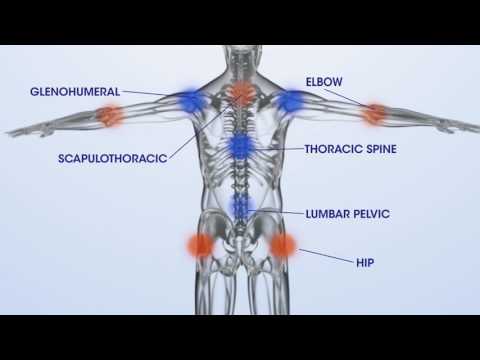
6. Stability vs. Mobility
Coach's take: Sharp, credible explanation of why hip stiffness shows up as low-back pain - excellent mental model.
3.7
Gym (women) / Popular
Improve usable range, control, and joint stability for lifting sessions.
Coach's take: Sharp, credible explanation of why hip stiffness shows up as low-back pain - excellent mental model.
Coach's take: Real coaching depth here, not just a list of moves.

Coach's take: Rare find — gives you an actual self-test with published norms, not just a stretch to copy.

Coach's take: The gold standard here — teaches a full framework (five stretch methods plus strengthening) instead of just a stretch of the week.

Coach's take: Credible PT delivering clear, well-explained cues - one of the better entries.

Coach's take: Well cued, follow-along session with both beginner and advanced options shown.

Coach's take: Outstanding — not just the drill, but every way people cheat it and how to catch yourself doing it.

Coach's take: Excellent depth — explains the mechanism behind the movement, not just the movement itself.

Coach's take: Explains the theory, not just the moves - a cut above most mobility videos.

Coach's take: Credible expert, concrete exercises, explains the reasoning — strong.

Coach's take: If you've ever wondered why your mobility gains don't stick, this is the answer — you need the active half too.

Coach's take: Simple, accurate joint-by-joint breakdown, a bit rough around the edges delivery-wise.

Coach's take: Great shoulder-specific cueing from a credible yoga teacher.

Coach's take: Sharp coaching detail — the cue to catch people faking a calf raise by hip-thrusting is one I use myself.

Coach's take: Smart content, but rambling delivery makes you work hard for it.

Coach's take: One good rule, clearly taught — never lock the joint out, live in the middle 80%.

Coach's take: Solid stability drills with real cueing, not just a list of exercise names.
Coach's take: Tight, no-nonsense, and correct — good use of the short format.

Coach's take: Fine to follow along with, but it's not really teaching you anything new.

Coach's take: Strong deep-squat coaching up front (j-hook, drive the quads), then it drifts into a lifting montage.

Coach's take: Good coaching, stability covered more than mobility.

Coach's take: Good coaching with a genuine balance element.
Coach's take: Excellent coaching; mobility angle incidental.

Coach's take: Impossible to judge from what came through — no coaching audio, just music. Treat this score as a shrug, not a verdict.

Coach's take: Good coaching; stability angle is secondary.

Coach's take: Good teaching, mobility coverage incidental.


Coach's take: Good setup explanation, but no coaching once the workout starts.