Body tension in Climbing

40 free video tutorials, each tagged by level

What coaches agree on

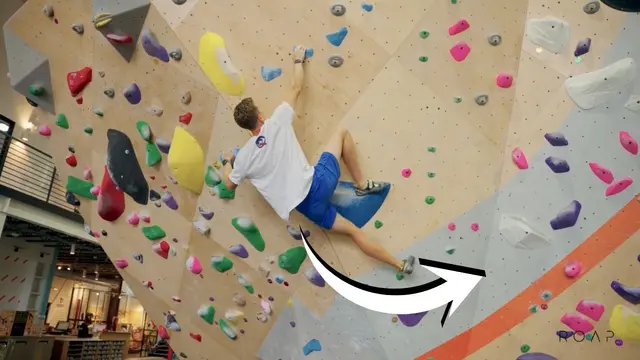
  • Twisting your hip into the wall on the same side as the hand you want to move, or rocking your weight over onto that foot, locks your lower body in place so the arm can release and reach freely.
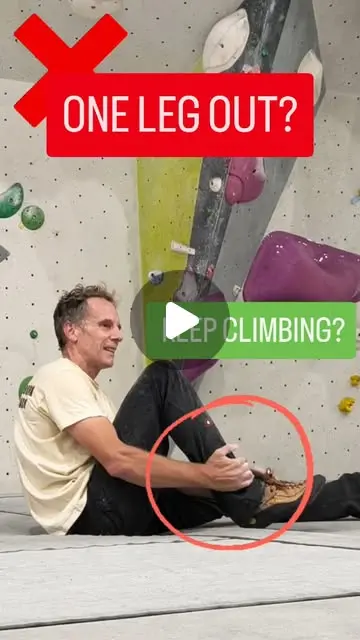
  • When releasing a hold, actively control your center of gravity by flagging your free leg against the wall or locking down hard onto your remaining foot, so your body doesn't swing out.
Show more

Common mistakes

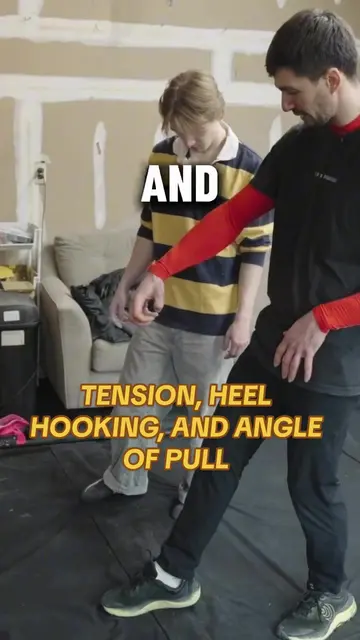
  • Letting a foot go passive, the heel dropping or pressure through the toe easing off right as you reach for the next hold, is what actually causes it to cut loose.
  • Holding or repositioning your body by pulling with bent arms, instead of standing up through your legs and rocking your hips over the foothold, pulls your feet off balance and drains tension.
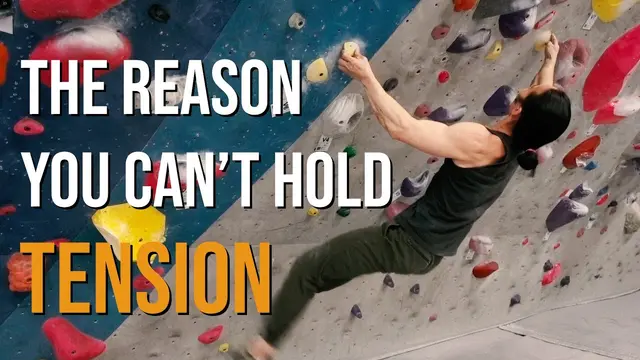
The Reason You Can't Hold Body Tension
Intermediate
The Reason You Can't Hold Body Tension

Reviewer Explains why your core work never transferred, then gives you the model that does - top of the pile.

Moderator Purely and completely the sub-skill, and it goes after the actual mechanism rather than the vibe. Opens by killing the misconception that tension is core-flexing, then splits it into leverage - counter pressure and the 90 degree rule - and pressure, meaning where you put your attention and force through the foot. Every minute is on the topic.

3.9
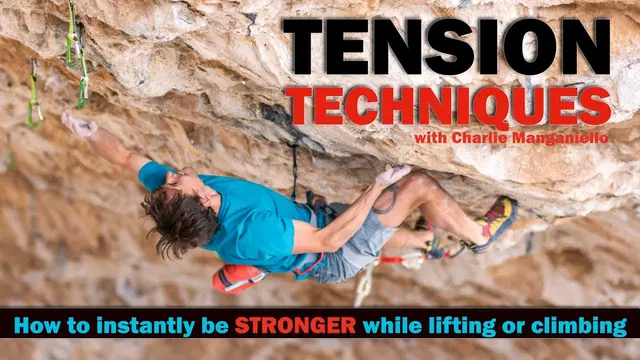
Create More TENSION | 6 Techniques to Become Instantly Stronger
Intermediate
Create More TENSION | 6 Techniques to Become Instantly Stronger

Reviewer Excellent, explains real mechanisms, not just 'stay tight,' and ties it directly to climbing moves.

Moderator This literally is body tension as a named, structured skill, breathing match, muscle irradiation, glute engagement as the foundation. Nothing else in this batch matches the sub-skill this directly.

3.8
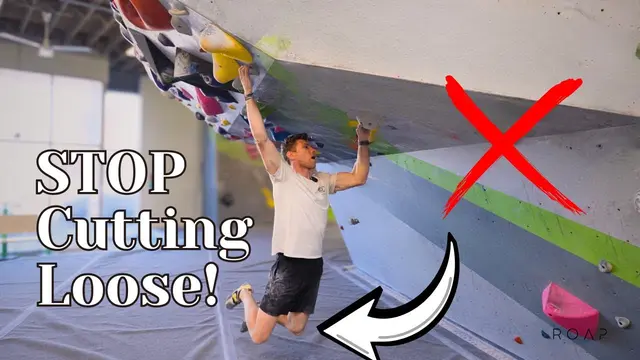
Actually good tips to cut feet less - Moonboard V4-V7 Case Studies for Better Body Tension
Intermediate
Actually good tips to cut feet less - Moonboard V4-V7 Case Studies for Better Body Tension

Reviewer Pull outwards to load the foot, stop yanking down on long moves - proper mechanism, proven on real problems.

Moderator This is the dedicated tension video and it knows it - he says outright he brushed the topic in the V5-to-V8 video and wanted to do it properly. Cutting feet is the concrete symptom of losing tension, and the whole video is spent on why it happens and how to stop it, worked through named problems he actually struggled on.

3.8
Why Do Climbers that "Stay Tight" Have Poor Body Tension? - Coaching w/ Dan #4
Advanced
Why Do Climbers that "Stay Tight" Have Poor Body Tension? - Coaching w/ Dan #4

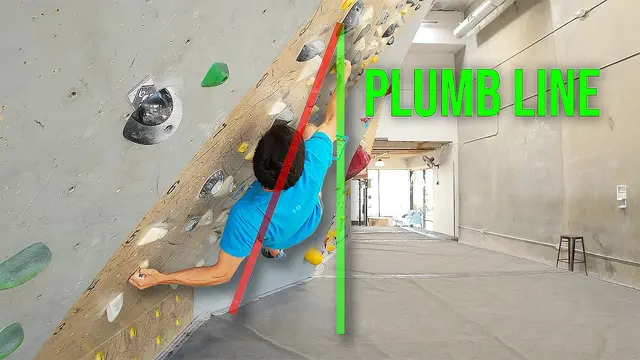
Reviewer Corrects the cue everyone repeats - stop sucking in, cast away from the bottom hand and find the plumb line.

Moderator Entirely the sub-skill, approached from the far side - why the standard tension advice produces bad tension. Sucking into the wall blocks your rotation and guarantees a swing the moment you release, which is the exact failure people blame on weak core. That's a body tension video in the truest sense.

3.8
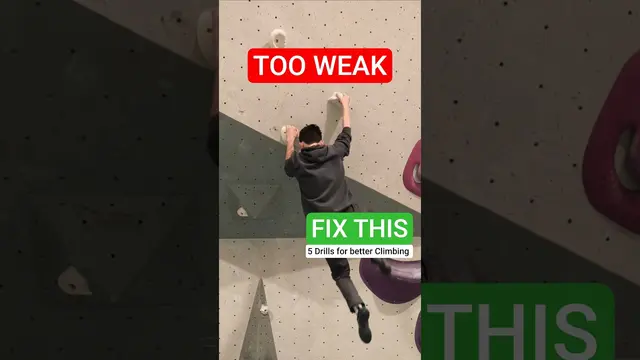
You’re Too Weak for Overhangs (5 Drills Fix It)
Intermediate
You’re Too Weak for Overhangs (5 Drills Fix It)

Reviewer Five drills, each with a clear reason - efficient and specific.

Moderator Explicitly framed as body tension training for overhangs from the first line - 'most climbers are too weak in the overhang, not pulling strength, but body tension and control' - then five drills that are literally that.

3.6
A TENSION TECHNIQUE the pros use in their climbing that you ...
Intermediate
A TENSION TECHNIQUE the pros use in their climbing that you ...

Reviewer Explains exactly why tension matters, not just that it does.

Moderator Squarely about body tension - locking the whole body down through legs, core, obliques, and lats before releasing a foot. This is exactly what the sub-skill is about, named and explained directly.

3.6
Tension Trainers: Stop Cutting Feet
Intermediate
Tension Trainers: Stop Cutting Feet

Reviewer Reads like real programming, not just a tips list -- genuinely well built.

Moderator A full drill methodology built specifically to train tension through the toes and lower body -- a dedicated tension-training prescription, not a tangential mention.

3.6
The Tension Technique That Makes your Project Feel Soft (Anchoring)
Intermediate
The Tension Technique That Makes your Project Feel Soft (Anchoring)

Reviewer Explains not just what to do but why it works -- genuinely excellent teaching.

Moderator This is explicitly a tension technique -- locking the whole body down over a foothold so a released trailing leg doesn't swing you off. He calls it 'the tension technique' right in the title. Dead center of the skill.

3.6
Why Do You Keep Cutting Loose?
Intermediate
Why Do You Keep Cutting Loose?

Reviewer Clear root-cause coaching, shoe fit plus the claw-vs-press distinction actually explains the problem.

Moderator Explicitly framed and delivered as a body tension lesson, feet cutting loose is a classic tension failure, and the video walks through shoe stiffness and big-toe pressure application as the direct causes and fixes. Squarely on-topic.

3.5
Beginner's guide to body tension: Climbing V1-3 *Freeze Game*
Beginner
Beginner's guide to body tension: Climbing V1-3 *Freeze Game*

Reviewer One of the better explained drills here -- tells you why it works and when to actually use it.

Moderator Entirely about a specific drill for building body tension/control, demonstrated across several grades with honest commentary on when it works and when it doesn't.

3.5
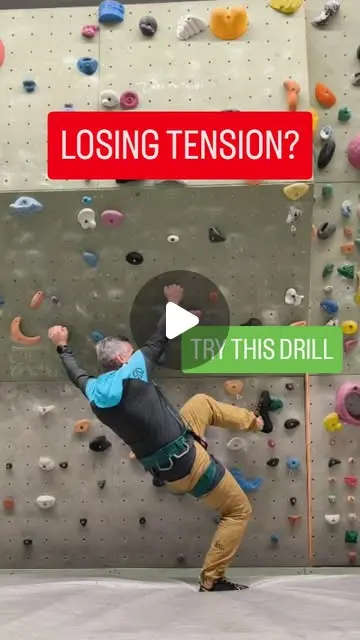
LOSING BODY TENSION? Try this drill. 👇 One of my ...
Intermediate
LOSING BODY TENSION? Try this drill. 👇 One of my ...

Reviewer Specific and usable: hold a stable line for 3-5 seconds on one foothold, then rotate by driving the free leg, and only progress once the position stays solid.

Moderator A proper body-tension drill for overhangs: one foothold, find a stable body line, release a hand and hold 3-5 seconds, then rotate around the foot by driving the free leg down. Try different footholds and distances. Right on the sub-skill.

3.4
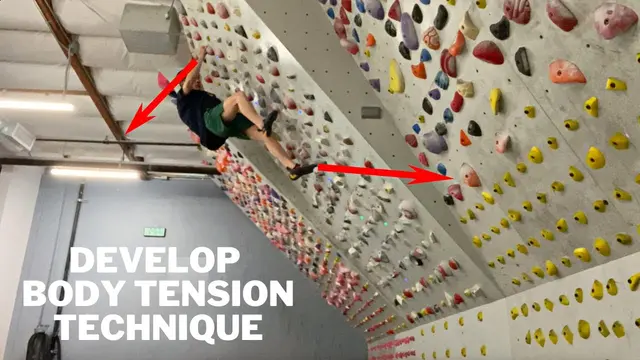
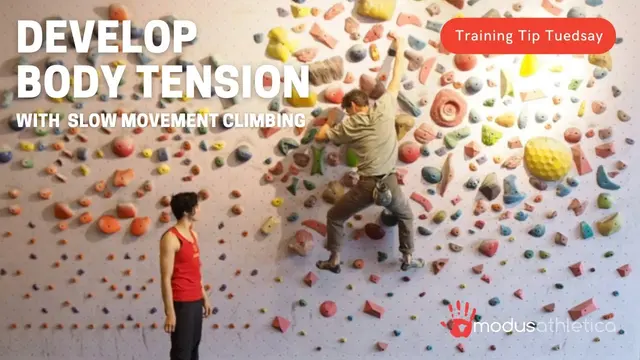
Develop Body Tension for Climbing // Slow Movement Climbing
Beginner
Develop Body Tension for Climbing // Slow Movement Climbing

Reviewer Simple drill, clearly explained -- you could go try this on the wall today.

Moderator A dedicated body-tension drill start to finish -- slow, deliberate movement to build body awareness. Nothing else going on in the video.

3.4
Toe Smears - INTERMEDIATE climbing BODY TENSION technique
Intermediate
Toe Smears - INTERMEDIATE climbing BODY TENSION technique

Reviewer Narrow and excellent - press that flagging foot into the wall and watch your hips stop dropping.

Moderator It's one specific tool rather than a treatment of tension as a whole, but the tool exists purely to create tension and he frames it that way from the first line - a way to learn technical body tension by climbing rather than by training. Every application shown is a tension problem: hips dropping, barn dooring, sagging after a cut-loose. On the sub-skill, just narrower than the title 'body tension' implies.

3.4
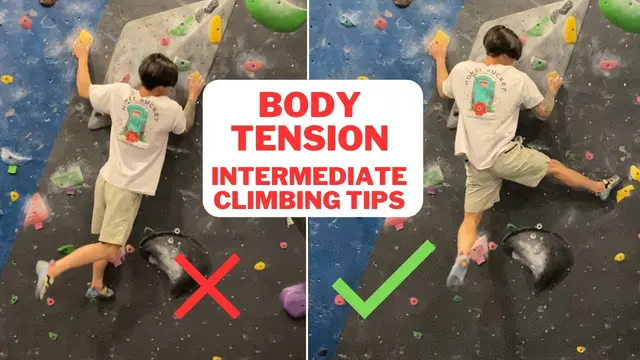
Body Tension Climbing: How To Use It and Common Mistakes
Beginner
Body Tension Climbing: How To Use It and Common Mistakes

Reviewer Great first lesson - the twist-the-hip cue plus a same-route comparison, minus a subscribe beg mid-flow.

Moderator The sub-skill and nothing else - what body tension is, the exact movement to create it, foot placement that makes or breaks it, and three specific errors beginners make with it. Even the demo route is chosen as a tension route and climbed twice, with and without, so you see the difference.

3.4
Tips latihan fisik||panjat tebing ||upper body - body tension ||climbing training
Intermediate
Tips latihan fisik||panjat tebing ||upper body - body tension ||climbing training

Reviewer Concrete circuit with real progressions - you could run this today.

Moderator Nine climbing-specific exercises explicitly framed around upper-body conditioning and body tension - plank variations, ring holds, one-leg stabilizer work. This is a body-tension training session, not a general workout borrowing the term.

3.3
5 Mistakes Every Beginner Makes With Their Body Position
Beginner
5 Mistakes Every Beginner Makes With Their Body Position

Reviewer Well organized and it explains why each mistake hurts you, not just that it's wrong.

Moderator Squarely on-topic, foot placement, verticality, using core and legs instead of arms, hip distance from the wall are all core body-tension and position concepts, and it stays focused on exactly that.

3.3
What Every Climber Should Know About Body Tension
Intermediate
What Every Climber Should Know About Body Tension

Reviewer Solid, well-demonstrated cues on feet and hips - a bit repetitive, light on the why.

Moderator All of it is the sub-skill, worked through three headings - feet, core, hips - on a 45 degree wall and the moonboard, which is where the problem actually lives. He even opens with the right diagnosis: he thought his fingers were failing on steep ground, and it was tension all along. That's exactly the confusion this sub-skill exists to fix.

3.3
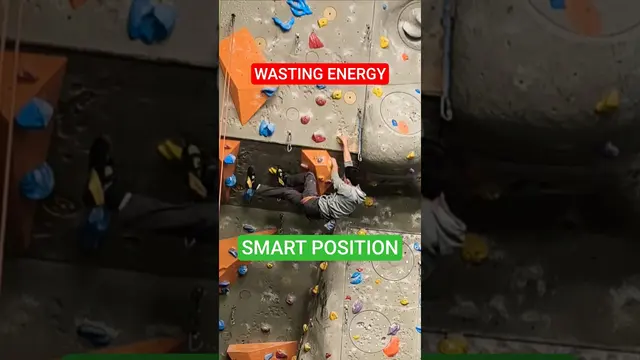
Strong… but still wasting energy?
Intermediate
Strong… but still wasting energy?

Reviewer The earlier-feet insight is the kind that actually changes your climbing.

Moderator Directly compares two climbers doing the same overhang move and frames the difference as tension and foot timing, not strength - 'you don't fall because you're weak, you fall because of bad positioning.' That's the sub-skill, taught through comparison.

3.2
Body Position 101 - Climbing for beginners
Beginner
Body Position 101 - Climbing for beginners

Reviewer Good analogies and real substance, just wrapped in a lot of banter.

Moderator Comprehensive coverage of the fundamentals underlying body tension, stable base, using hips over arms, barn door defined and explained, straight-arm efficiency on overhangs. Squarely on-topic and thorough for a 101.

3.2
Are you feeling loose on the wall? Adjusting your body ...
Beginner
Are you feeling loose on the wall? Adjusting your body ...

Reviewer Good plain-English definition that corrects the all-core misconception, but it stays at the concept level with no drill or example of using it on the wall.

Moderator Explains what body tension means: whole-body engagement from the toes up through the legs, arms and shoulders, not just the lower core. Notes that when climbers say 'use body tension' they usually mean moves made with the hips square to the wall, though twisting can create tension too. Squarely on the concept.

2.9
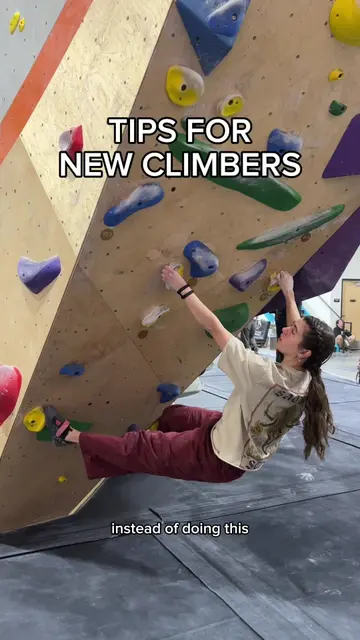
How to Improve your crimps INSTANTLY with Body Positioning
Intermediate
How to Improve your crimps INSTANTLY with Body Positioning

Reviewer Specific and correct, if tied closely to one particular route.

Moderator Real-time coaching on a crimpy route, and the actual content is body positioning to take load off the fingers - center of gravity over the foothold, controlled releases with the core tight, not muscling through with the crimp. That's body tension applied directly.

2.9
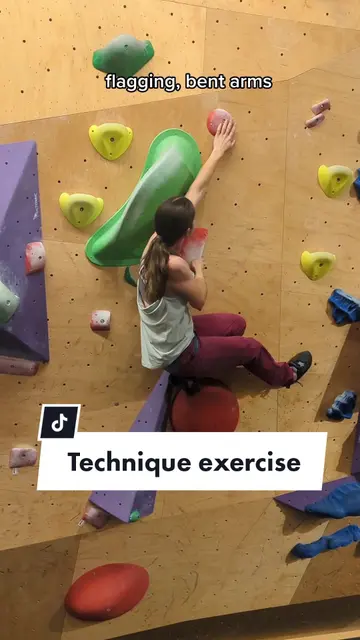
Training Body Tension ft. @GeekClimber
Advanced
Training Body Tension ft. @GeekClimber

Reviewer Good specific drill and a clear fault to fix -- a bit loose in delivery but the content holds up.

Moderator Real coaching session targeting body tension specifically -- identifies a concrete weakness (dangle time after cutting feet) and drills it directly.

2.9
Square Dancing drill for overhangs climbing
Intermediate
Square Dancing drill for overhangs climbing

Moderator A drill aimed straight at body tension: climb an overhanging route with your hips square to the wall and knees pointing out instead of twisting, so your core has to stay engaged on every move. Squarely on topic.

Reviewer Simple drill that works, with sensible advice on where to start and when to go steeper. Wants more cueing on what tension should feel like, and it ends with a plug for a free assessment.

2.8
How to climb correctly – standard movement on steep rock💥 #learntoclimb
Beginner
How to climb correctly – standard movement on steep rock💥 #learntoclimb

Reviewer Concise and correct, from what reads as a real technique coach.

Moderator German-language but clear: covers the entry move onto rock and explicitly names Korperspannung (body tension) as the actual point, not strength - outer foot triangle, hip rotation, gaze on the foot. Squarely the sub-skill.

2.8
What Is Body Tension In Climbing? | Climb With Sway
Beginner
What Is Body Tension In Climbing? | Climb With Sway

Reviewer Good analogy, gets the concept across, just a bit padded.

Moderator A dedicated conceptual explainer of what body tension is, using an airplane/counterbalance analogy and the opposite-hand-to-opposite-leg 'X' pattern.

2.8
How to IMPROVE your Weakness INSTANTLY: Body Tension Progression Example
Intermediate
How to IMPROVE your Weakness INSTANTLY: Body Tension Progression Example

Reviewer The good-vs-bad comparison actually teaches something real.

Moderator He names body tension as his own weakness and walks an entire real project around it -- core engagement, adding foot pressure on a bad foothold, hip positioning. It's the explicit subject start to finish.

2.7
Master Your Climbing Technique: Legs and Arms Connection
Intermediate
Master Your Climbing Technique: Legs and Arms Connection

Reviewer Good mental model: engage toes, ankle, hamstring and glute like you do fingers and forearm. A bit abstract and dense.

Moderator A concept talk on getting tension through the whole chain: big toe, ankle, calf, hamstring, glute, mid-back and lats, so your legs grab the wall like your hands do and you stay stuck in. That's body tension with a lower-body slant. Squarely on topic.

2.6
Use it for balance Flag for stability Keep your hips close Use body ...
Intermediate
Use it for balance Flag for stability Keep your hips close Use body ...

Reviewer Solid concept, could use a concrete drill.

Moderator Explicitly discusses body tension multiple times in the context of using the free leg for balance and stability, especially in overhangs - squarely relevant even though it's framed as a 'one leg' challenge.

2.5
What The Pros Do But Nobody Teaches It
Intermediate
What The Pros Do But Nobody Teaches It

Reviewer Good mechanics explained clearly, just gets derailed by a sponsor segment in the middle.

Moderator This is really a flagging-technique video, but the mechanism it's built around, controlling your center of gravity or 'line of tension' to avoid barn-dooring, is core body tension territory, so it covers the sub-skill substantially even though the named technique, the back flag, is narrower than body tension overall.

2.5
Want to get better at board climbing?
Intermediate
Want to get better at board climbing?

Reviewer The tension section itself is genuinely good, specific and mechanistic, not generic.

Moderator Body tension is a real part of this video, the long-core-tension-via-hip-drive and shoulder T-position sections are squarely on-topic, but it's one piece of a broader board-training video that also covers warmup routines, shoe choice, and grip habits. Covers the sub-skill among other things rather than being built around it.

2.3
Breaking Down a Unique Body Position Technique in a V6 (7A) I Climbed Post Finger Injury
Advanced
Breaking Down a Unique Body Position Technique in a V6 (7A) I Climbed Post Finger Injury

Reviewer One sharp, generalizable insight buried in a lot of 'here's my beta' narration.

Moderator Framed as beta for a specific V6, not a body-tension lesson per se, but the crux itself IS a body-tension technique -- bending the arm on a toe-hook to create opposing compression, generalized explicitly to any similar undercling-style position.

2.2
V7 Climber Learns V13 Level Tension and Footwork
Advanced
V7 Climber Learns V13 Level Tension and Footwork

Reviewer Good ideas in here, but you have to dig for them through the noise.

Moderator Real coaching session explicitly about tension and footwork -- buried in a lot of cheering and back-and-forth, but the actual technical bits (why dry-firing happens based on shoulder position, directing force through the foot before pulling) are squarely tension and technique coaching.

2.0
I watched a few climbers struggle on this move. When I tried it I ...
Intermediate
I watched a few climbers struggle on this move. When I tried it I ...

Reviewer Correct and quick, light on the why.

Moderator Same drop-knee content as elsewhere in this queue - a real, specific application of body tension (pivoting with pressure through the feet to free a hand), narrower than the concept as a whole but legitimately on-topic.

1.9
Connective Climbing on TikTok
Intermediate
Connective Climbing on TikTok

Reviewer Quick, correct, could use more depth.

Moderator Drop knee is a specific technique that's really an application of body tension (pivoting on a foothold while holding tension through the body to free a hand), so it's a legitimate but narrower slice of the sub-skill rather than tension as a general concept.

1.9
A simple exercise to improve your climbing technique. ...
Intermediate
A simple exercise to improve your climbing technique. ...

Moderator A warm-up exercise: pause before grabbing each hold and find the best body position for the move (hips twisted, flagging, drop knees), pulling with the feet to build tension from toes through to hands. Brings in body tension, but it's mostly about positioning.

Reviewer Simple warm-up habit: stop before every grab and find the position that uses your feet and tension instead of your arms.

1.8